Skip to content
Chemistry Steps

Chemistry Steps

Chemistry Steps
  • Topics
    • Organic Chemistry
  • Practice Problems
  • Study Guides
  • Quizzes
    • Solutions
  • CS Benefits
  • Log In
    • Register
Chemistry Steps
  • Topics
    • Organic Chemistry
  • Practice Problems
  • Study Guides
  • Quizzes
    • Solutions
  • CS Benefits
  • Log In
    • Register

General Chemistry

Ionic Bond

by Dr. S. Gevorg
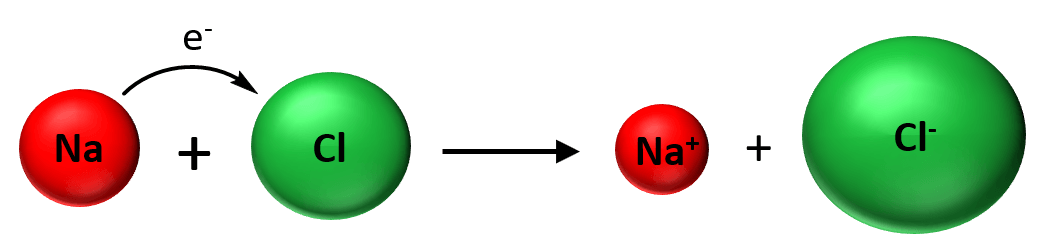
Na and Cl ion formation

The ionic bond is normally formed between metals and nonmetals and the reason for this is their different electron affinity. Remember, metals have low ionization energies and therefore, tend to form cations, while nonmetals have high electron affinity and tend … Read more
Categories Concepts of Chemical Bonding Leave a comment

Lewis Dot Symbols

by Dr. S. Gevorg
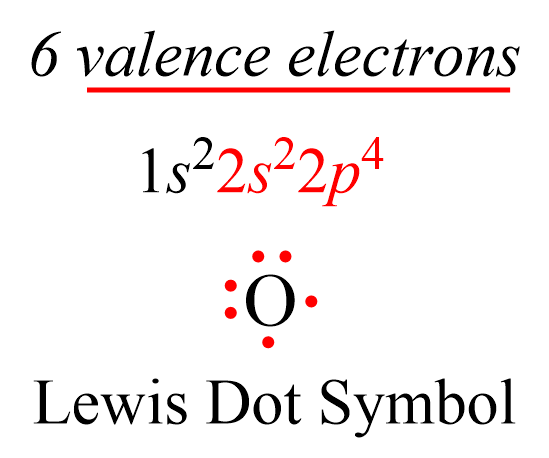
Lewis symbol of oxygen

Lewis dot symbols consist of the symbol of an element surrounded by its valence electrons represented as dots. So, to draw the Lewis dot symbol of an element, we must first know how many valence electrons it has. Remember, this … Read more

Categories Concepts of Chemical Bonding Leave a comment

Osmotic Pressure

by Dr. S. Gevorg
Osmotic Pressure

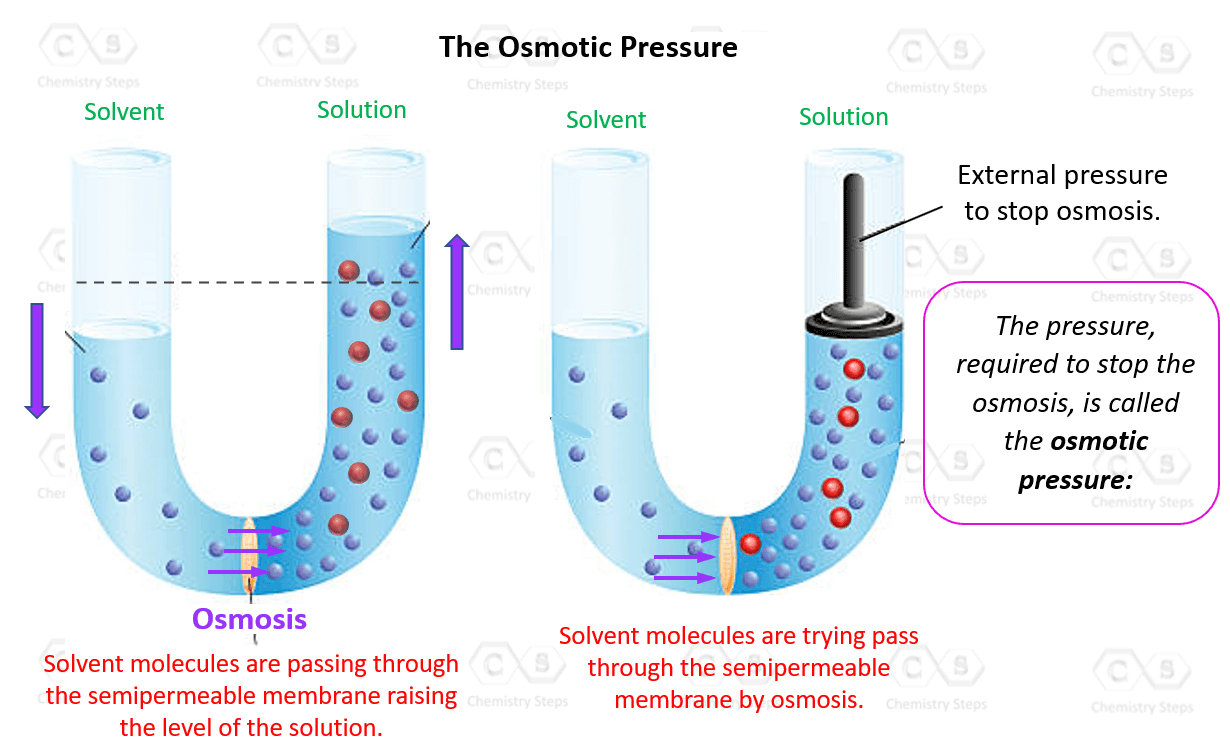
Another colligative property of solutions is the osmotic pressure. So, what is osmotic pressure? To understand it, let’s imagine a tube with a semipermeable membrane that separates a solvent from a solution:     The semipermeable membrane allows passing of … Read more

Categories Properties of Solutions Leave a comment

Freezing Point Depression

by Dr. S. Gevorg
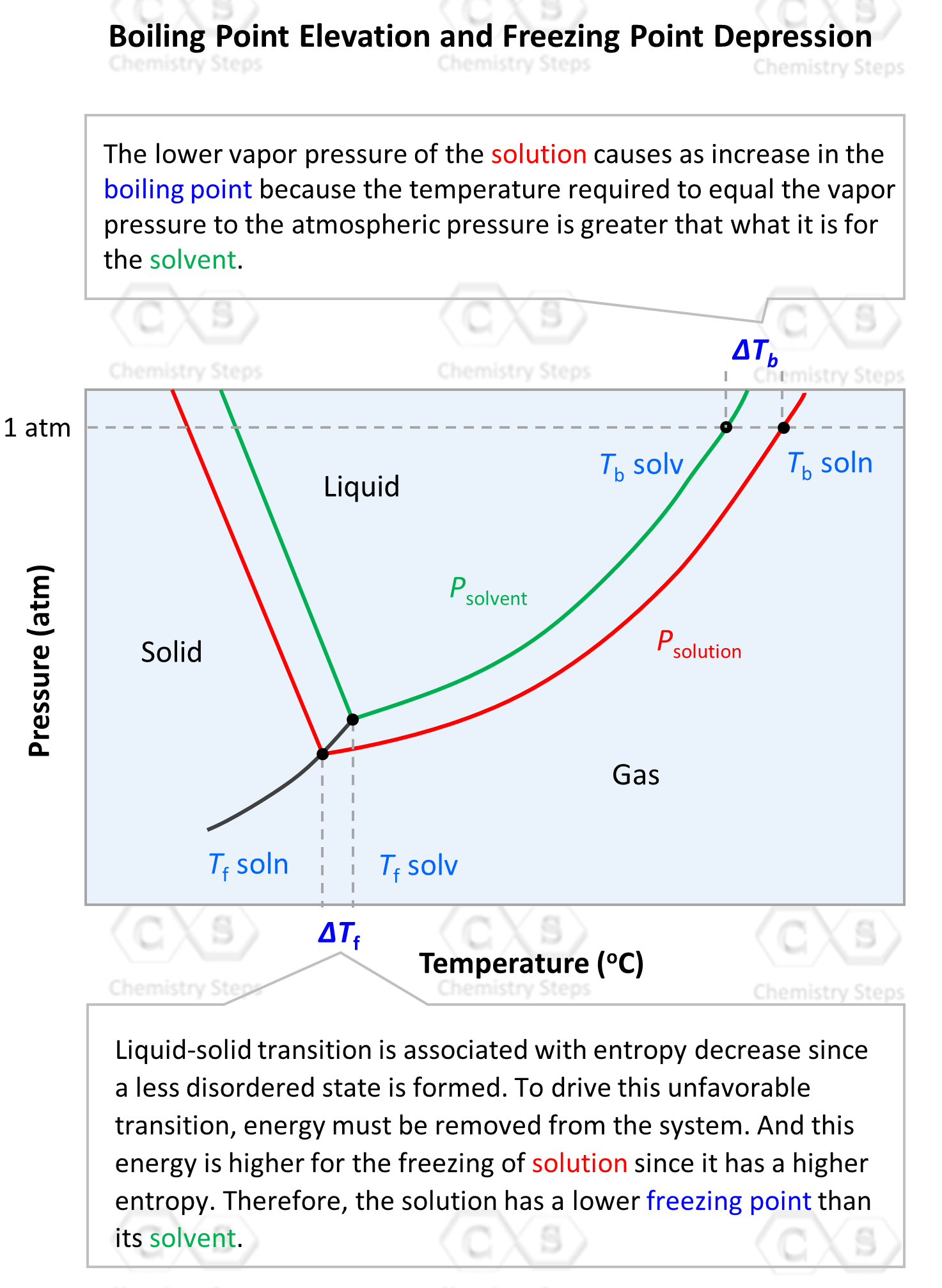
Boiling Point Elevation and Freezing Point Depression Graph

Have you ever wondered what they are sparing on airplanes on cold days before they take off?   What they are spraying is a solution typically containing ethylene glycol, C₂H₆O₂ which lowers the freezing point of water. It is essentially … Read more

Categories Properties of Solutions Leave a comment

Boiling Point Elevation

by Dr. S. Gevorg
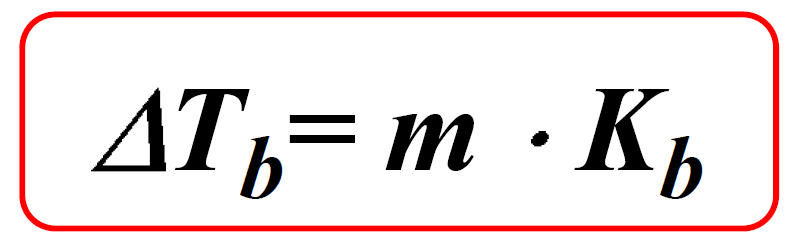
Boiling Point Elevation formula

In the previous post, we have seen that solutions have lower vapor pressure than the corresponding pure solvents. In short, this is because the solution has higher entropy than the solvent, and the evaporation of the solvent molecules from the … Read more

Categories Properties of Solutions Leave a comment

Vapor Pressure Lowering

by Dr. S. Gevorg
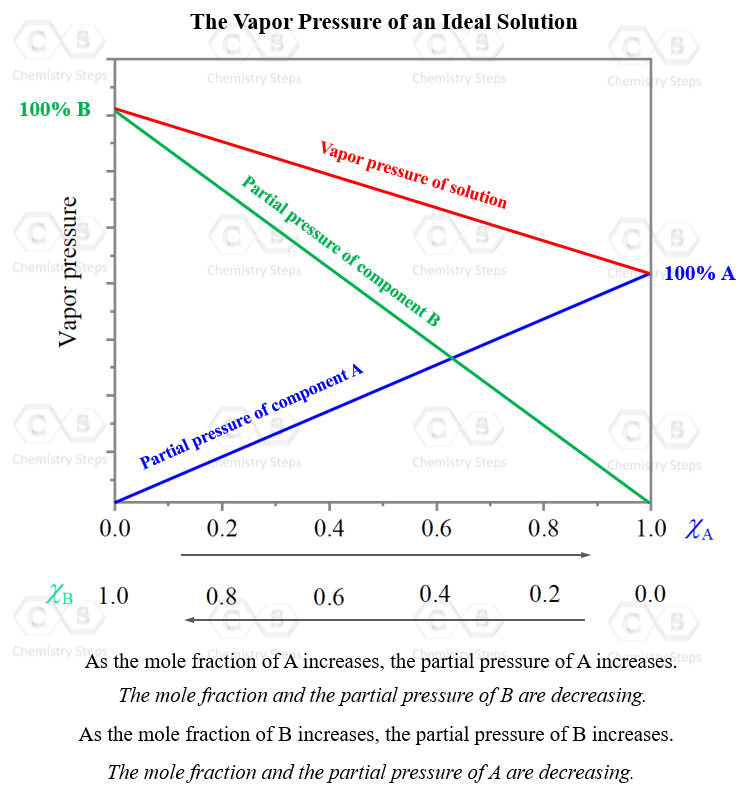
Vapor pressure of ideal solution graph

Vapor pressure lowering is a colligative property of solutions. So, first, what is vapor pressure? Recall that when a liquid evaporates in a closed container, an equilibrium is established between the liquid and the gas, and the pressure exerted by the … Read more

Categories Properties of Solutions Leave a comment

Colligative Properties

by Dr. S. Gevorg

Colligative (collective) properties are those that depend only on the number of particles dissolved in solution, and not on the type of particle. For example, salt is sometimes scattered on icy roads to melt the ice.     What happens … Read more

Categories Properties of Solutions Leave a comment

VSEPR Theory

by Dr. S. Gevorg

The VSEPR (valence shell electron pair repulsion) theory predicts the geometry of atoms or molecules. It is based on the principle that atoms and lone pairs repel each other because of electrostatic forces and thus, they are positioned as far … Read more

Categories Molecular Geometry Leave a comment

Lewis Structures

by Dr. S. Gevorg
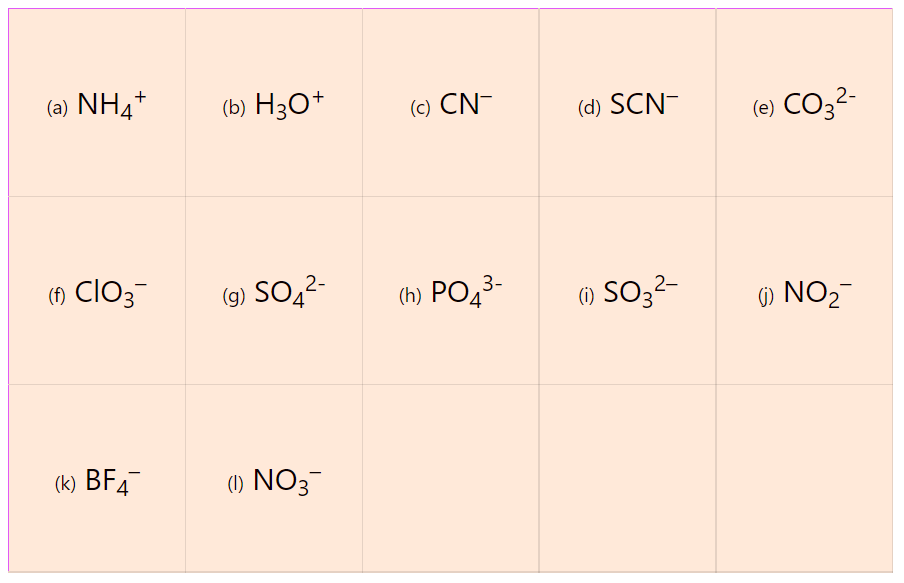
geometry of ions VSEPR practice

We know that the formation of covalent bonds is achieved by an overlap of orbitals between two atoms that share a pair of valence electrons. The bonds are most often shown with either two dots or a line, and these … Read more

Categories Concepts of Chemical Bonding Leave a comment

sp, sp2, sp3, sp3d, and sp3d2 Hybridization Practice Problems

by Dr. S. Gevorg
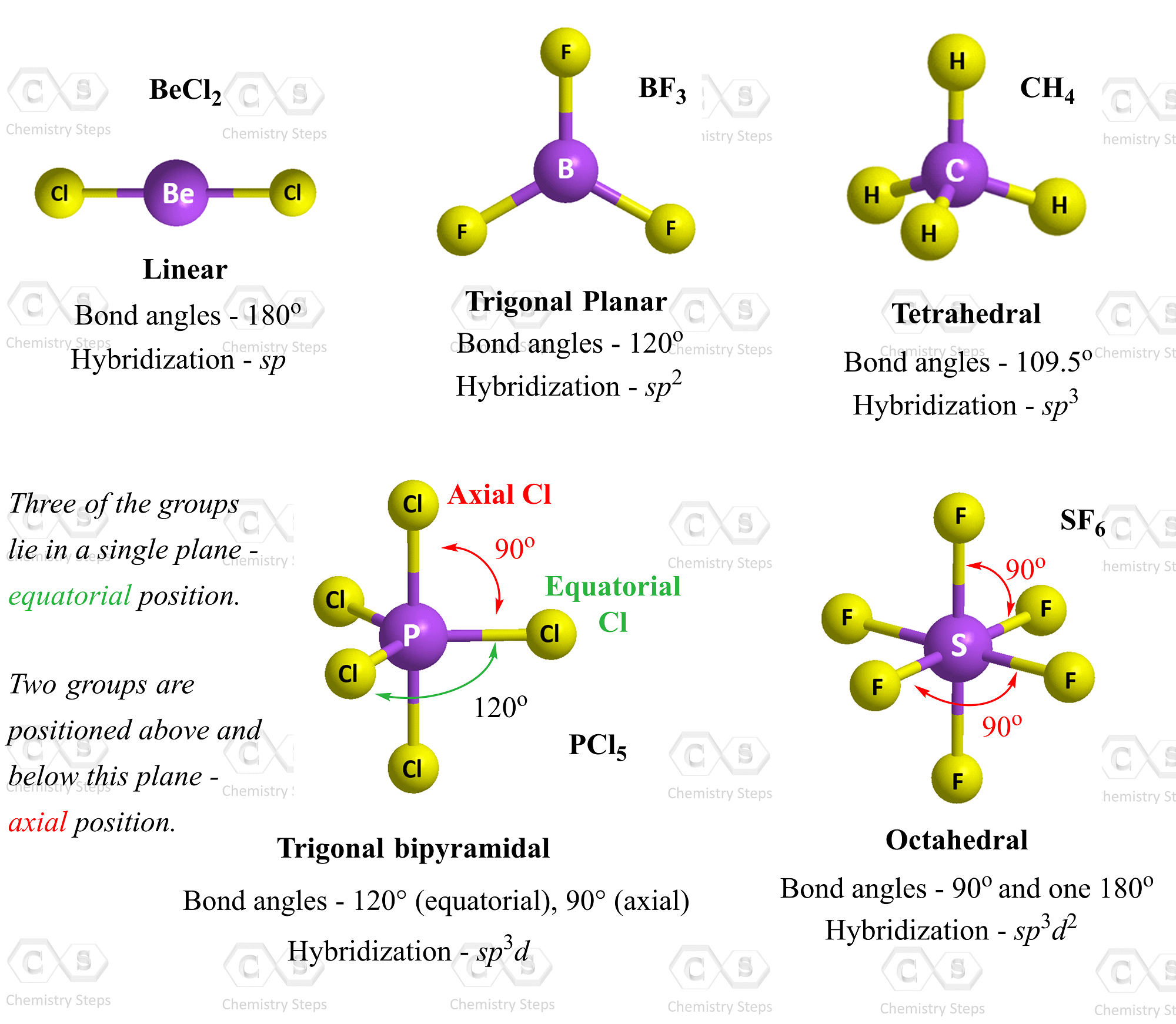
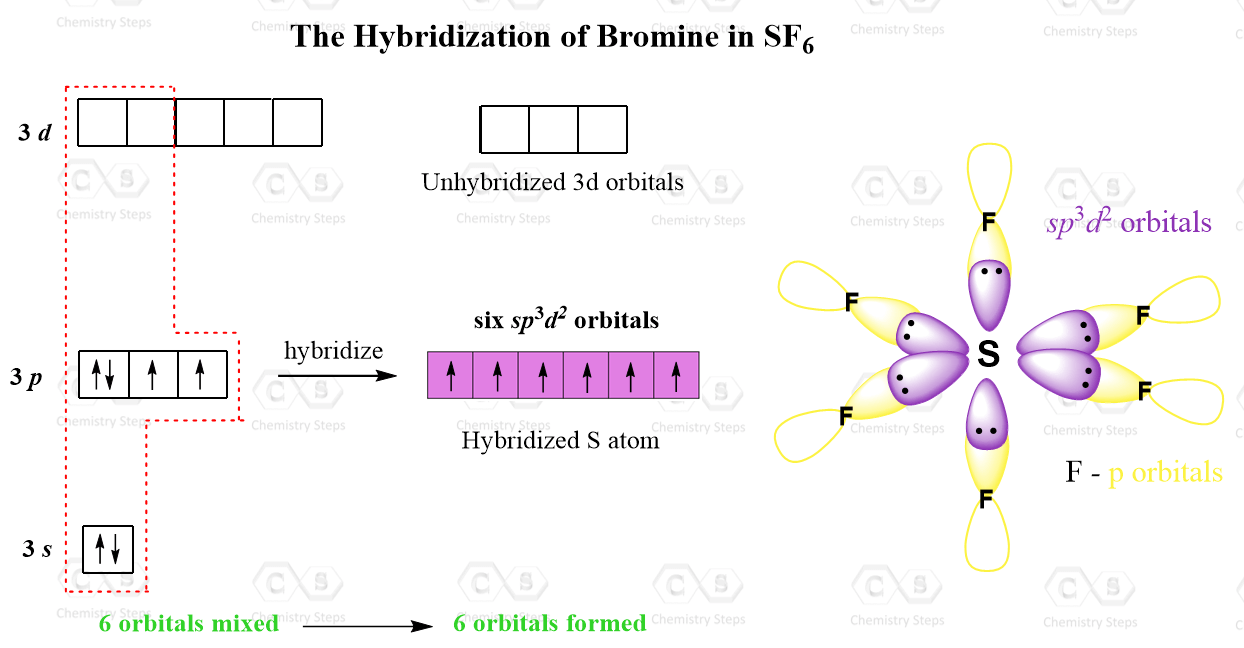
SF6 sp3d2 hybridization

In the previous post, we talked about the hybridization of atomic orbitals, so this practice set is to master to concepts of determining whether an atom is sp, sp2, sp3, sp3d, or sp3d2 hybridized. 

Categories Molecular Geometry 3 Comments
Older posts
Newer posts
← Previous Page1 … Page8 Page9 Page10 … Page21 Next →

General Chemistry Study Guides

Preparing for orgo organic chemistry after General Chemistry

Chemistry Steps LLC

General Chemistry Articles, Study Guides, and Practice Problems.


5900 Balcones Drive, Austin, TX 78731

info@chemistrysteps.com

  • YouTube
  • Facebook
  • Pinterest
  • Instagram

About

Terms

Privacy Policy

Contact

Feedback

Copyright © 2016 - 2026 Chemistry Steps
Next Page »