Skip to content
Chemistry Steps

Chemistry Steps

Chemistry Steps
  • Topics
    • Organic Chemistry
  • Practice Problems
  • Study Guides
  • Quizzes
    • Solutions
  • CS Benefits
  • Log In
    • Register
Chemistry Steps
  • Topics
    • Organic Chemistry
  • Practice Problems
  • Study Guides
  • Quizzes
    • Solutions
  • CS Benefits
  • Log In
    • Register

General Chemistry

Hess’s Law Practice Problems
by Dr. S. Gevorg
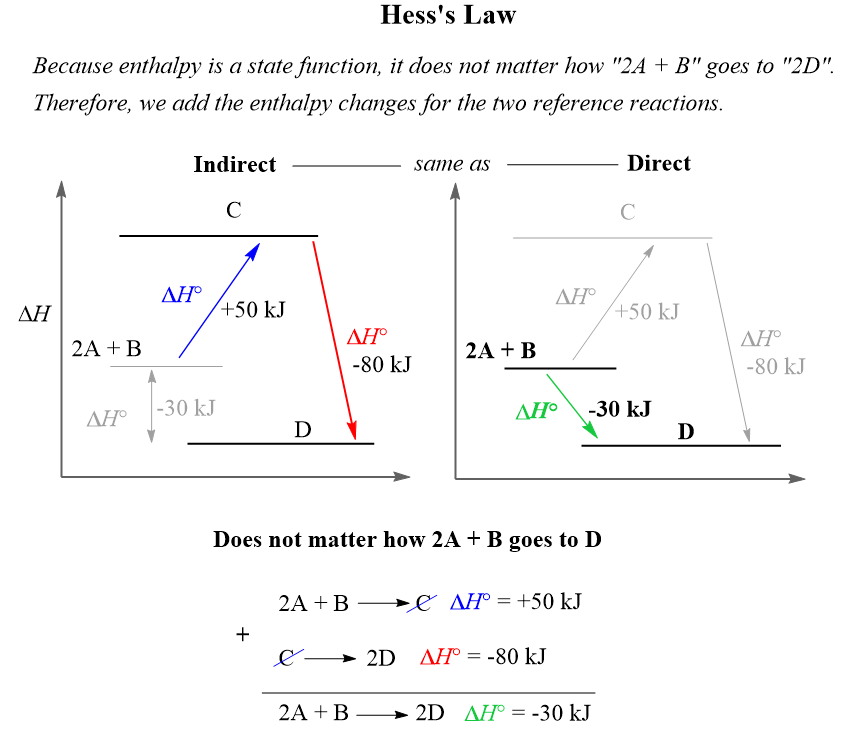
Hess's law state function diagram explanation

In the previous post, we talked about the Hess’s law and how it can be used for measuring the enthalpy change (ΔH) for a reaction without making calorimetric measurements. In short, the Hess’s law is based on the fact that enthalpy is … Read more
Categories Thermochemistry Leave a comment

How to Know Which Gas Law Equation to Use

by Dr. S. Gevorg
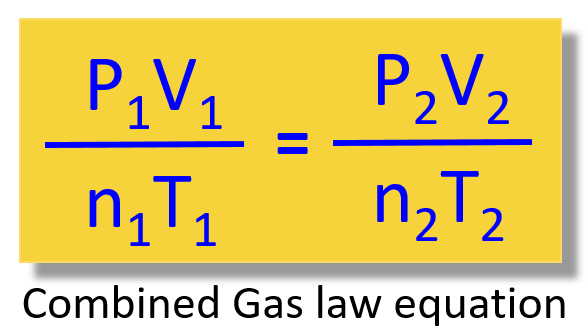
combined gas law equation

How do you know which ideal gas equation to use when solving a problem? Fortunately, there is a short answer to this, and it is the combined gas law equation:     It allows you not to memorize all the … Read more

Categories Gases Leave a comment

Stoichiometry of Reactions in Aqueous Solutions

by Dr. S. Gevorg

These calculations are based on the same principles we learn in stoichiometric calculations. The only difference for most problems is going to be the fact that the quantities are given in molarities rather than in moles. Remember that you need … Read more

Categories Reactions in Aqueous Solutions Leave a comment

Balancing Redox Reactions

by Dr. S. Gevorg

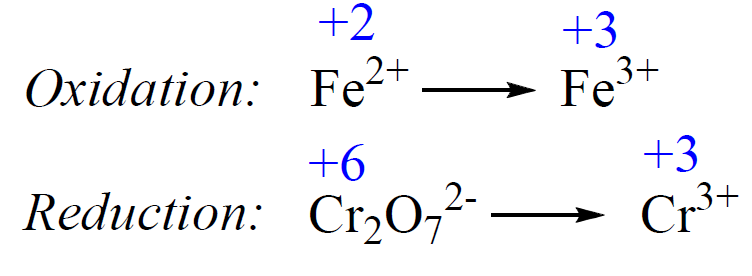
Redox reactions can be balanced with the half-reaction method. The half-reaction shows the oxidation and reduction processes separately. For example,  Zn + Ag+   →    Zn2+ + Ag Follow these steps to balance this reaction: 1) Add the oxidation states and … Read more

Categories Reactions in Aqueous Solutions 6 Comments

Oxidation-Reduction (Redox) Reactions

by Dr. S. Gevorg
Redox reaction example terminology

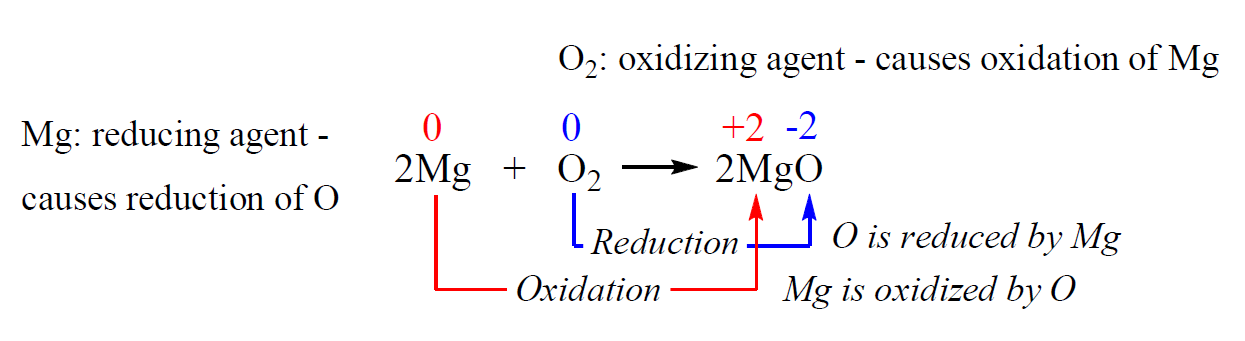
Oxidation-reduction, or redox, reactions are electron transfer reactions. Because of electron transfers, the oxidation states of some atoms are changed in redox reactions.   The atom that accepts an electron(s) is said to be reduced, and the one that gives … Read more

Categories Reactions in Aqueous Solutions Leave a comment

Acid–Base Titrations

by Dr. S. Gevorg
Acid base titrations - titrant analyte equivalence point and point

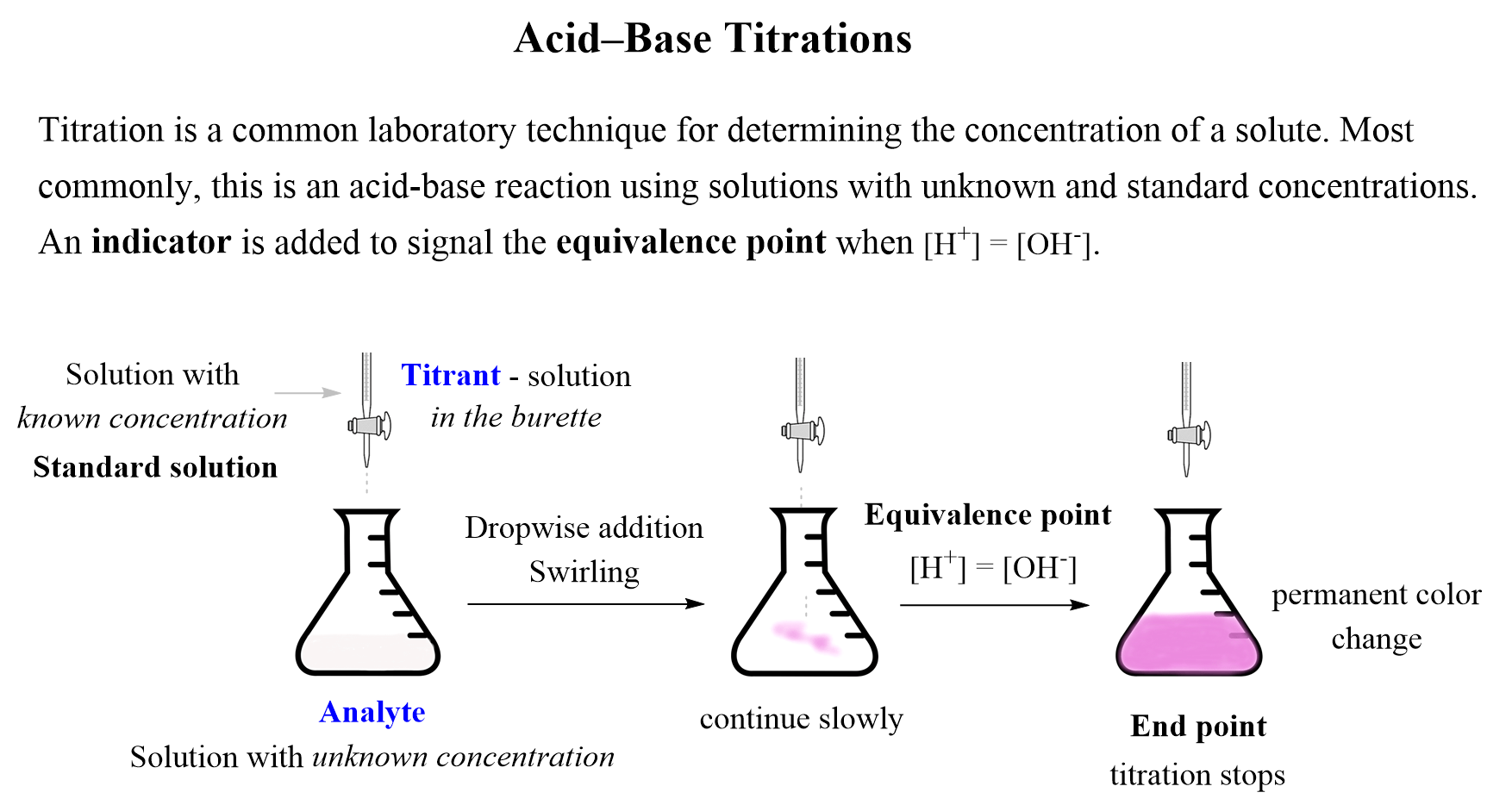
Titration is a common laboratory technique for determining the concentration of a solute. The most common types of titrations are acid-base titrations and redox titrations. Today’s topic is the acid-base titrations so let’s see how they work. Before the titration … Read more

Categories Reactions in Aqueous Solutions Leave a comment

Definition of Acids and Bases

by Dr. S. Gevorg
Lewis acid and base electron donor acceptor

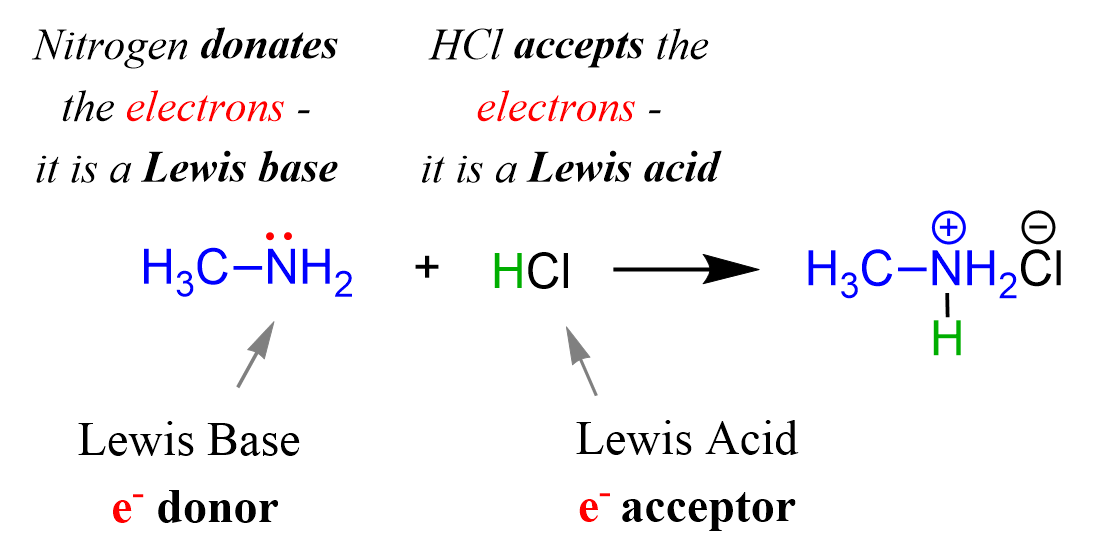
There are three theories for classifying acids and bases. The Arrhenius Theory of Acids and Bases This is the oldest acid-base theory proposed by Swedish chemist Svante Arrhenius in 1884. According to the Arrhenius acid-base theory, acids are compounds that … Read more

Categories Acids and Bases, Reactions in Aqueous Solutions Leave a comment

Molecular, Ionic, and Net Ionic Equations

by Dr. S. Gevorg

All the equations where the reactants and products are shown as molecules with complete chemical formulas are called molecular equations. This, essentially, is what we use for most reactions. For example: 2K3PO4(aq) + 3BaCl2(aq) → Ba3(PO4)2(s) + 6KCl(aq) However, we … Read more

Categories Reactions in Aqueous Solutions Leave a comment

General Properties of Solutions

by Dr. S. Gevorg

Before talking about electrolytes, let’s formulate the concept of solutions. A solution is a homogeneous mixture of two or more substances. The substance present in the greatest quantity is called the solvent, and the other substance(s) is called solute(s). The … Read more

Categories Reactions in Aqueous Solutions Leave a comment

Stoichiometry of Chemical Reactions

by Dr. S. Gevorg
Stoichiometry molar calculations

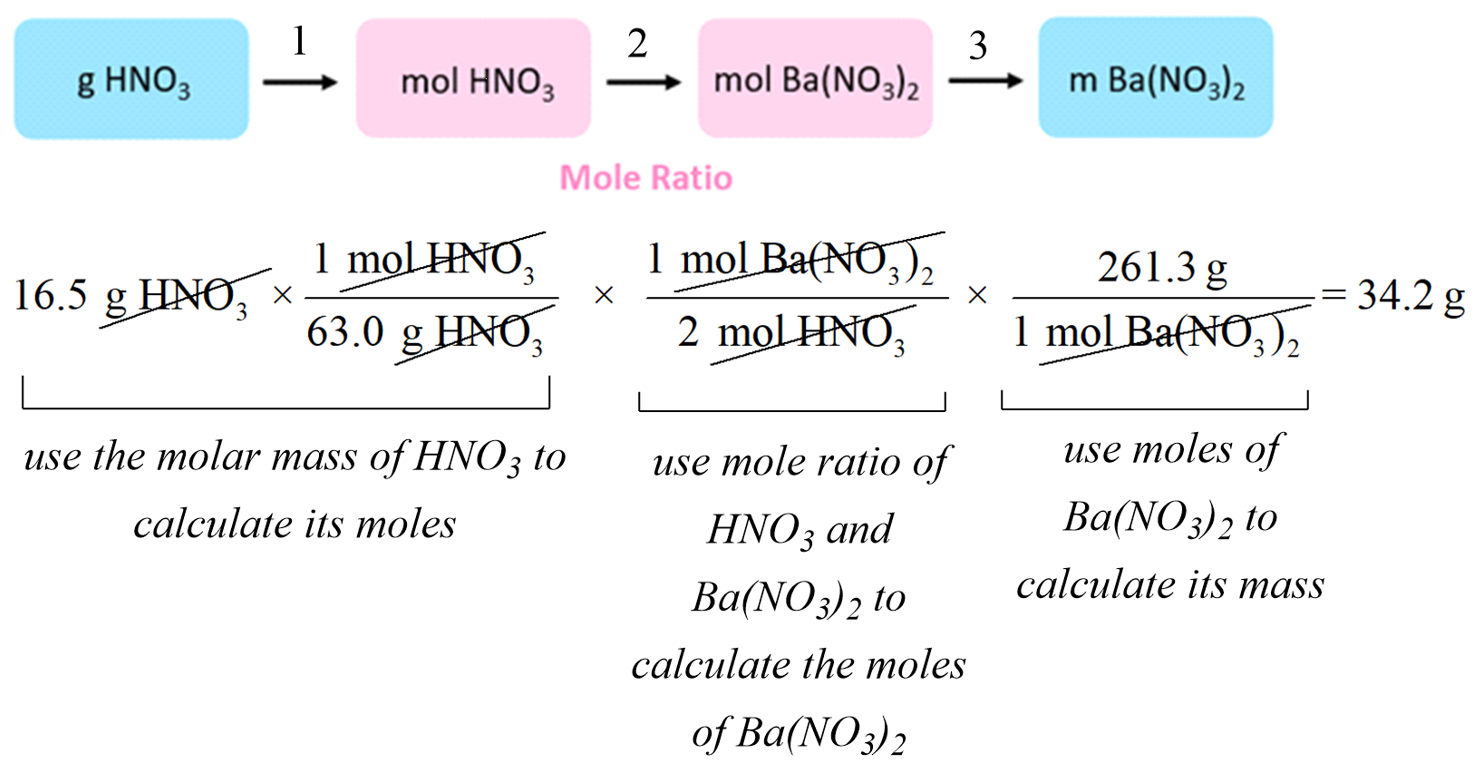
In a chemical reaction, stoichiometry shows the mole-ratio of the reactants and products based on the coefficients, which are written before them. It allows calculating the amount of any component of a chemical reaction if one of them is given … Read more

Categories Stoichiometry 7 Comments
Older posts
Newer posts
← Previous Page1 … Page16 Page17 Page18 … Page21 Next →

General Chemistry Study Guides

Preparing for orgo organic chemistry after General Chemistry

Chemistry Steps LLC

General Chemistry Articles, Study Guides, and Practice Problems.


5900 Balcones Drive, Austin, TX 78731

info@chemistrysteps.com

  • YouTube
  • Facebook
  • Pinterest
  • Instagram

About

Terms

Privacy Policy

Contact

Feedback

Copyright © 2016 - 2026 Chemistry Steps
Next Page »